
Power Protection During Unpredictable Outages
Backup Power Systems in Farmersville and McKinney for properties requiring uninterrupted electrical service during storms
North Texas experiences weather patterns that create power disruptions lasting anywhere from minutes to multiple days, and backup power systems maintain functionality for equipment that cannot tolerate interruption. Critical circuits for medical devices, home offices, security systems, and refrigeration require continuous power to prevent health risks, productivity loss, and property damage. Jay's Electric & Media Solutions designs backup power solutions throughout McKinney and Farmersville based on which circuits must remain energized and how long the system needs to operate independently from utility power.
Backup power design begins with identifying loads that justify protection investment: sump pumps that prevent flooding, well pumps that supply water, HVAC systems that prevent temperature extremes, and communication equipment that maintains connectivity. The system selection depends on whether you need whole-home coverage or targeted circuit protection, with options ranging from portable generators with manual transfer switches to fully automatic standby systems that restore power before you notice the outage.
Request a backup power evaluation to identify which circuits require protection and what system configuration matches your budget and reliability requirements.
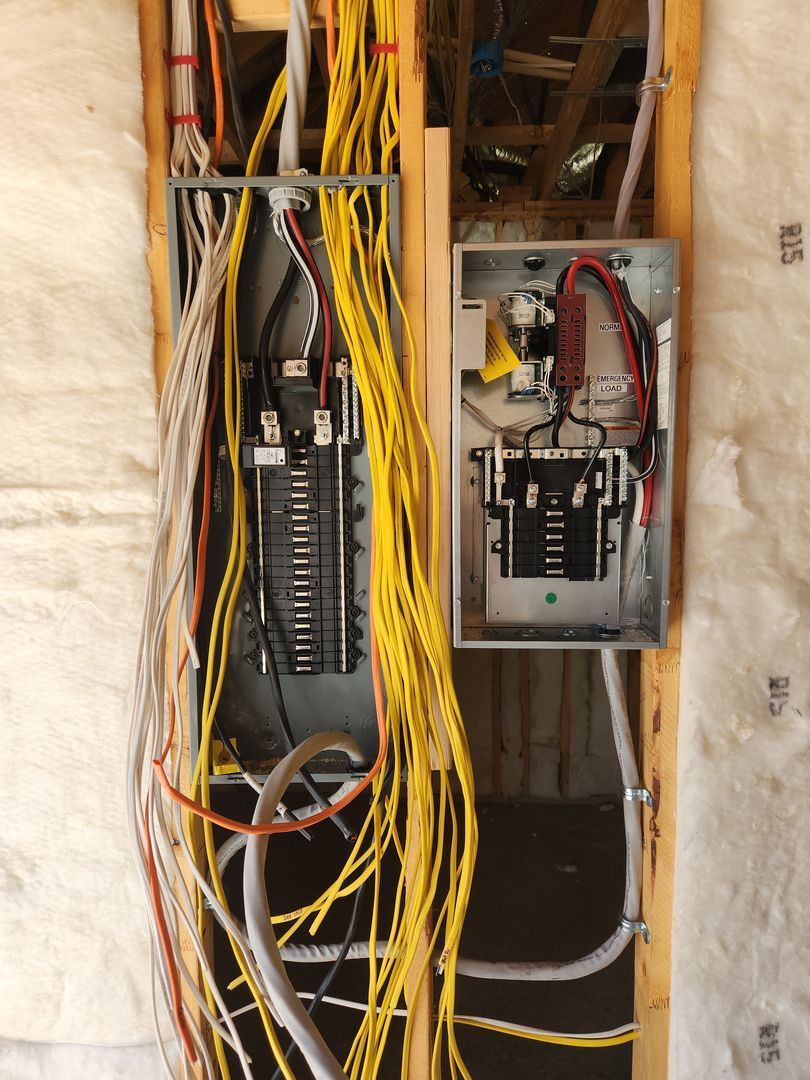
What Determines Backup Power System Design
System sizing calculations separate essential loads from convenience loads to prevent oversizing equipment and wasting fuel capacity on circuits that don't require backup protection. Essential loads typically include one refrigerator, one AC or heating zone, lighting circuits, and specific outlets for medical equipment or communication devices. The electrical panel integration determines whether protected circuits receive power through an automatic transfer switch that operates independently or a manual switch that requires you to start the generator and throw the transfer lever during outages.
Once installed, backup systems keep designated circuits energized while leaving non-essential loads unpowered, and you see specific rooms and outlets functioning normally while others remain dark. Automatic systems eliminate the response delay entirely, with generator startup occurring within seconds of grid failure. Manual systems require you to wheel out a portable unit, connect it to a dedicated inlet, start the engine, and flip the transfer switch.
Whole-home systems provide seamless power to all circuits and cost significantly more than targeted backup solutions, while partial-home systems offer protection for critical loads at lower equipment and fuel costs. The distinction matters during extended outages when fuel consumption determines how long the system can operate before requiring refueling or waiting for utility restoration.
Common Questions About Backup Power Solutions
Demand for reliable backup power throughout North Texas has increased as severe weather events create longer and more frequent outages that affect rural and suburban areas.
What is the difference between standby and portable generators?
Standby generators install permanently with automatic transfer switches and direct fuel connections, while portable generators require manual setup, refueling, and transfer switch operation during each outage event.
How quickly does backup power restore after an outage begins?
Automatic standby systems detect voltage loss and restore power to protected circuits within ten to fifteen seconds, while manual systems require several minutes for you to deploy and start the generator before transferring circuits.
What fuel type offers the best backup power reliability?
Natural gas generators connect to utility lines for unlimited runtime but may lose supply during certain disasters, while propane systems depend on tank size and refill logistics, with diesel generators offering the longest runtime per gallon but requiring more frequent maintenance intervals.
Can backup power systems protect sensitive electronics?
Transfer switches prevent voltage irregularities during the transition between grid and generator power, and properly sized generators maintain stable frequency and voltage that protect computers, smart devices, and entertainment systems throughout the outage.
How often do backup power systems require testing?
Monthly test runs verify that engines start reliably and transfer switches operate correctly, with annual professional service including oil changes, filter replacement, battery testing, and load bank testing to confirm full power output under demand.
Jay's Electric & Media Solutions evaluates your electrical panel, identifies critical circuits, and recommends backup systems that match your protection priorities and operating preferences. Schedule a property assessment to review fuel options and system configurations available for your location.