
Entertainment Spaces Without Visible Cable Clutter
TV Mounting and Media Wiring in Farmersville and McKinney for homeowners upgrading entertainment systems and eliminating exposed cables
Concealed media wiring routes HDMI cables, power lines, and audio connections inside walls, eliminating the hanging cables and visible wire bundles that detract from clean room aesthetics after mounting a flat-screen television. Jay's Electric & Media Solutions handles TV mounting and media wiring for living rooms, bedrooms, outdoor patios, and dedicated media spaces where secure installation and organized cable management improve both appearance and functionality. Residential properties throughout Farmersville and McKinney increasingly feature large-format displays and integrated sound systems that require more than simple tabletop placement, demanding secure wall mounting and concealed wiring that meets electrical code requirements.
Professional TV mounting involves locating wall studs to support the weight of modern displays, installing code-compliant electrical outlets behind the TV location to avoid visible power cords, and routing cables through walls to connect streaming devices, gaming consoles, sound bars, and cable boxes without exposing wiring across the wall surface. The process ensures displays remain level, secure, and positioned at optimal viewing height while maintaining access to device connections and allowing future equipment changes without requiring new wall penetrations or visible cable runs.
Request TV mounting and media wiring services to eliminate cable clutter and optimize viewing setup for your entertainment space.
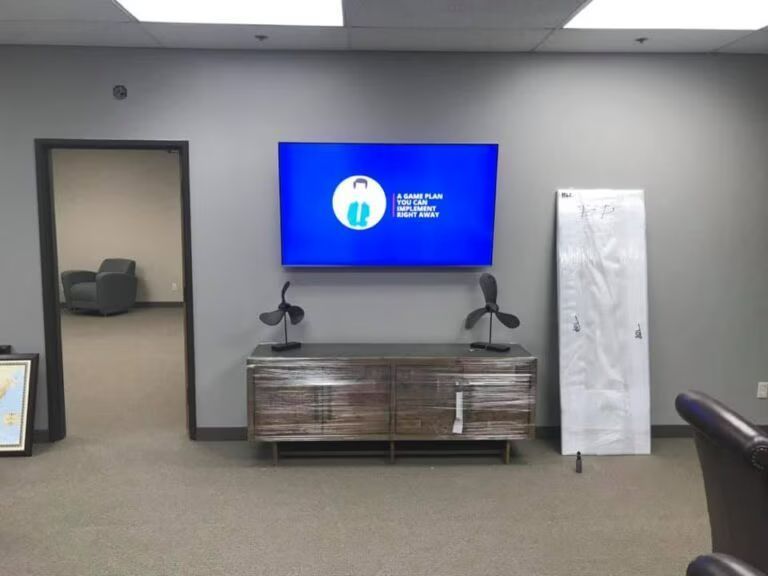
What Changes After Media Wiring Completes
Installation begins by identifying the TV's final position based on seating layout and viewing angles, determining wire paths that avoid conflicts with plumbing or existing electrical circuits inside walls, and selecting appropriate mounting hardware rated for the display's weight and VESA pattern. Low-voltage media cables and line-voltage electrical wiring must follow separate paths to prevent signal interference and meet code requirements that prohibit mixing power and data cables inside the same conduit or wall cavity.
After installation, the television sits flat against the wall without visible cords or hanging cables, media devices connect through concealed wiring that allows easy replacement without tearing into walls, and power outlets positioned behind the display keep electrical connections hidden while remaining accessible for troubleshooting. The mounting bracket allows controlled tilting or swiveling depending on the model selected, and all cable connections remain reachable through access panels or recessed boxes that maintain the clean appearance of the installation.
The service includes verifying that wall construction can support the selected mounting method, installing blocking or reinforcement when mounting to drywall without studs in the ideal location, and confirming that all cable terminations provide secure connections that won't degrade signal quality or create loose connections requiring service calls after installation. Outdoor installations require weatherproof enclosures and corrosion-resistant hardware to withstand temperature fluctuations and moisture exposure common in North Texas climates.
Common Questions About This Service
Homeowners planning entertainment system upgrades often want to understand installation requirements and wiring options before purchasing new equipment.
What wiring is needed to hide cables for wall-mounted TVs?
Installations require running HDMI cables, speaker wire, and network connections through walls from the TV location to a media cabinet or equipment shelf, along with installing an electrical outlet behind the display to eliminate the visible power cord that most homeowners want to avoid after mounting a television.
How does professional mounting differ from using retail mounting kits?
Professional installation includes locating studs with precision rather than relying on approximate measurements, ensuring mounts are level and positioned at ergonomically appropriate viewing heights, verifying weight ratings match display specifications, and running concealed wiring that meets electrical code rather than simply hiding cables behind cable covers attached to the wall surface.
Why do media room setups in Farmersville homes often require dedicated circuits?
Large displays combined with soundbars, AV receivers, streaming devices, gaming consoles, and network equipment can exceed the safe capacity of standard 15-amp circuits shared with lighting or other room loads, making dedicated 20-amp circuits necessary to prevent breaker trips during normal entertainment system use.
What mounting considerations apply to outdoor TV installations?
Outdoor mounts require weatherproof construction, displays rated for temperature extremes and moisture exposure, protected electrical outlets with in-use weatherproof covers, and cable entries sealed against water infiltration that would damage connections and create electrical hazards during Texas rainstorms common throughout the region.
How does concealed wiring improve room functionality beyond aesthetics?
Hidden cables eliminate tripping hazards near entertainment centers, prevent accidental disconnections caused by vacuuming or furniture movement, protect expensive HDMI and fiber optic cables from damage, and allow furniture rearrangement without needing to relocate visible wire bundles running across floors or walls.
Jay's Electric & Media Solutions evaluates wall construction, equipment locations, and wiring paths to create clean entertainment installations with concealed cables and secure mounting. Contact us to plan TV mounting and media wiring that improves both appearance and functionality throughout your home.